
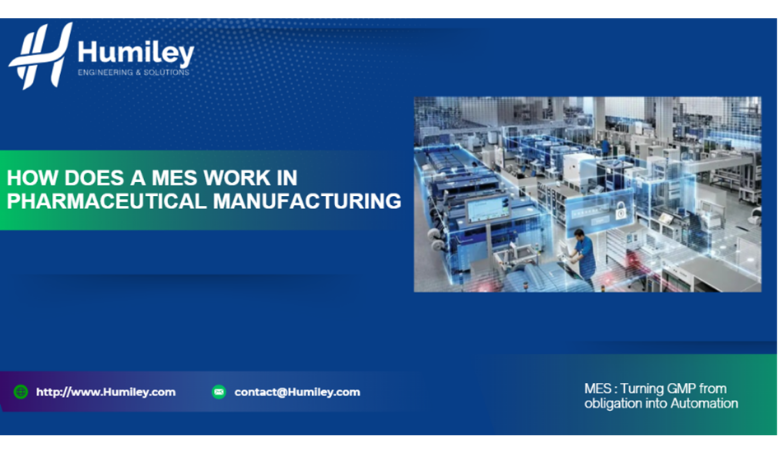
How Does an MES Work in Pharmaceutical Manufacturing?
A Manufacturing Execution System (MES) acts as the digital backbone of pharmaceutical production, bridging enterprise planning systems and shop floor operations. It ensures that every step of manufacturing is executed accurately, consistently, and in full compliance with regulatory standards.
1. Order Execution & Intelligent Scheduling
MES translates production plans from ERP into actionable manufacturing orders.
Optimizes scheduling based on:
Material availability
Equipment readiness
Workforce allocation
Ensures efficient utilization of resources and minimizes downtime
Outcome: Right product, right time, right resources
2. Real-Time Data Collection & Process Control
MES continuously captures data directly from the shop floor via SCADA/PLC systems (e.g., zenon).
Tracks:
Raw material consumption
Machine performance (OEE, downtime)
Environmental conditions (temperature, humidity)
Enables real-time monitoring and control of critical process parameters
Outcome: Full visibility and immediate response to deviations
3. Electronic Batch Record (EBR) Management
MES replaces manual, paper-based documentation with fully digital batch records.
Automatically records:
Process steps
Operator actions
Equipment data
Supports Review by Exception (RBE)
Outcome:
Faster batch release
Improved traceability
Reduced human error
4. Quality Management & Regulatory Compliance
MES embeds quality into the manufacturing process rather than inspecting it afterward.
Detects deviations in real time
Triggers:
Alerts
Investigations
Corrective actions (CAPA)
Ensures compliance with:
GMP
FDA 21 CFR Part 11
Outcome: Continuous compliance and audit readiness
5. Seamless Integration Across Systems
MES acts as a central integration layer across the pharma ecosystem:
ERP → Production planning & materials
LIMS → Laboratory testing results
SCADA/PLC → Shop floor execution
Outcome: End-to-end data integrity and a single source of truth
Final Insight
MES doesn’t just track production it ensures every batch is manufactured correctly, consistently, and compliantly.